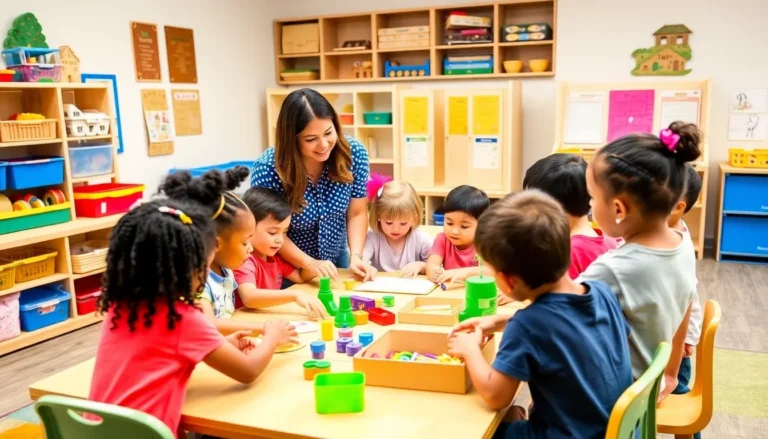

Imagine a world where learning is as fun as stacking blocks. Enter Montessori blocks, the colorful champions of early childhood education. These delightful wooden wonders aren’t just toys; they’re tools that ignite creativity, enhance fine motor skills, and foster problem-solving abilities. Who knew that building a tower could also build a brain?
Montessori blocks invite children to explore their imaginations while developing essential skills. They’re like the Swiss Army knives of playtime—versatile, engaging, and packed with potential. From toddlers to preschoolers, these blocks offer endless opportunities for discovery. So, let’s dive into the world of Montessori blocks and uncover how they can turn playtime into a powerful learning experience. After all, who wouldn’t want their little ones to learn while having a blast?
Table of Contents
ToggleOverview of Montessori Blocks
Montessori blocks comprise essential tools in early childhood education. These wooden blocks engage children with diverse shapes and colors, promoting a multi-sensory learning environment. Their design encourages imaginative play while aiding in the development of fine motor skills.
Children explore spatial relationships as they stack, balance, and arrange the blocks. Each interaction fosters cognitive growth and enhances problem-solving abilities. Educational benefits are evident as children learn to recognize patterns, colors, and shapes through constructive play.
Versatility characterizes Montessori blocks. They cater to various age groups, making them suitable for toddlers and preschoolers alike. As children progress, the complexity of play can increase, allowing for a tailored learning experience.
Parents and educators appreciate the durability of Montessori blocks. Constructed from high-quality wood, these blocks withstand rigorous play while maintaining aesthetic appeal. Safe and non-toxic finishes ensure their suitability for young children.
Additionally, Montessori blocks facilitate cooperative play. Children collaborate and share ideas when engaged in group activities, promoting social skills. Communication improves as they discuss strategies and solutions while playing.
Through intentional play, Montessori blocks support developmental milestones. Fine motor skills strengthen as children grasp and manipulate blocks. Cognitive skills flourish as they experiment with balance, gravity, and symmetry.
Montessori blocks serve as more than mere toys. They become integral to a child’s learning journey, transforming playtime into opportunities for growth and discovery. These blocks exemplify the blend of fun and education crucial in early childhood development.
Types of Montessori Blocks
Montessori blocks come in various types, each offering unique educational benefits that support a child’s development.
Wooden Blocks
Wooden blocks play a significant role in Montessori education. These solid pieces are durable and promote imaginative play. Children engage with their tactile nature while stacking and arranging them. Various shapes and sizes facilitate exploration of balance and stability. Recognizing colors and patterns becomes a natural part of play. Educators appreciate their high-quality craftsmanship, which ensures safety for young learners. Many wooden blocks are painted with non-toxic finishes, making them suitable for all ages.
Foam Blocks
Foam blocks provide a lightweight alternative to traditional blocks. Their soft materials make them safe for young children, reducing the risk of injury during play. These blocks often come in vibrant colors, sparking creativity and encouraging pretend play. Children easily manipulate foam blocks, which enhances their fine motor skills. They also promote cooperative activities, allowing kids to work together during construction challenges. The fun of stacking and collapsing foam structures keeps children engaged and learning.
Magnetic Blocks
Magnetic blocks introduce a dynamic dimension to building play. These blocks connect effortlessly through magnetic edges, enabling children to explore geometry and structure. Various shapes encourage imaginative creations, from simple towers to complex designs. Children learn through trial and error as they discover how to balance and connect pieces. Their innovative design supports cognitive growth by fostering problem-solving skills. Many sets come with themed elements, stimulating creativity and enhancing collaborative play experiences.
Benefits of Montessori Blocks
Montessori blocks offer numerous benefits that enhance early childhood development. These blocks serve as foundational tools in a child’s educational journey.
Enhancing Fine Motor Skills
Fine motor skills develop through various activities using Montessori blocks. Stacking blocks encourages hand-eye coordination as children grasp and manipulate the pieces. Balancing blocks leads to improved dexterity while they experiment with different arrangements. Arranging blocks in specific configurations strengthens finger muscles, crucial for tasks like writing. Engaging in such activities fosters independence as children learn to control their movements. Building structures not only entertains but also enhances concentration and focus.
Promoting Cognitive Development
Cognitive development thrives with the use of Montessori blocks. Experimenting with block arrangements cultivates problem-solving abilities as children navigate challenges in construction. Recognizing patterns and colors amplifies memory skills while they engage in constructive play. Understanding spatial relationships emerges as they explore how different shapes fit together. Collaborating with peers during block play encourages teamwork and communication, vital social skills for future interactions. Encouraging imaginative play facilitates creativity, allowing children to explore concepts freely. Each opportunity for exploration drives cognitive growth while making learning enjoyable.
Choosing the Right Montessori Blocks
Choosing Montessori blocks involves understanding the child’s developmental needs and ensuring a suitable match for their age and skill level. Various options cater to different stages, enhancing engagement and learning.
Age Appropriateness
Age appropriateness defines the level of complexity in block play. For toddlers aged one to three, soft foam blocks support early exploration. Preschoolers, ages three to five, benefit from traditional wooden blocks that encourage more advanced building techniques. Blocks that introduce magnetic components suit children approximately five years and older, facilitating geometric understanding. Selecting blocks based on age fosters a more rewarding play experience.
Quality and Safety Considerations
Quality and safety matter in selecting Montessori blocks. Parents should choose blocks crafted from durable, non-toxic materials like solid wood to resist wear and tear. Ensuring that all finishes are safe guarantees children’s health during play. The size of blocks impacts safety, with larger pieces reducing choking hazards for younger children. Prioritizing high-quality materials not only promotes longevity but also enriches children’s play experiences through tactile exploration.
Montessori blocks stand out as invaluable resources in early childhood education. Their ability to blend play with learning makes them essential for fostering creativity and cognitive skills. As children engage with these blocks they not only develop fine motor skills but also enhance their problem-solving abilities and social interactions.
The variety of Montessori blocks available ensures that there’s something suitable for every child’s developmental stage. By choosing high-quality, safe materials parents and educators can create enriching play environments that support growth and discovery. Ultimately, Montessori blocks are more than just toys; they’re tools that nurture a lifelong love for learning.