
Montessori puzzles are more than just colorful pieces of wood; they’re gateways to a child’s imagination and learning. These engaging tools not only entertain but also promote critical thinking and fine motor skills. Imagine a world where kids can piece together their own adventures, all while developing essential cognitive abilities.
Table of Contents
ToggleOverview Of Montessori Puzzles
Montessori puzzles stimulate a child’s cognitive development through engaging play. These puzzles come in various shapes and themes, appealing to diverse interests. Typically made from high-quality wood, they feature vibrant colors that attract attention and encourage exploration.
Each puzzle supports specific learning objectives, including problem-solving, spatial awareness, and logical reasoning. Children manipulate pieces to fit into corresponding slots, fostering fine motor skills and hand-eye coordination.
Educational benefits arise from different puzzle types. Alphabet puzzles enhance literacy skills by introducing letters and sounds, while number puzzles promote early math concepts. Shape puzzles help children understand geometric forms and support visual discrimination.
In addition to skill-building, Montessori puzzles strengthen patience and perseverance. As children work through challenges, they build resilience and confidence in their abilities. This hands-on approach nurtures a love for learning, encouraging independent exploration.
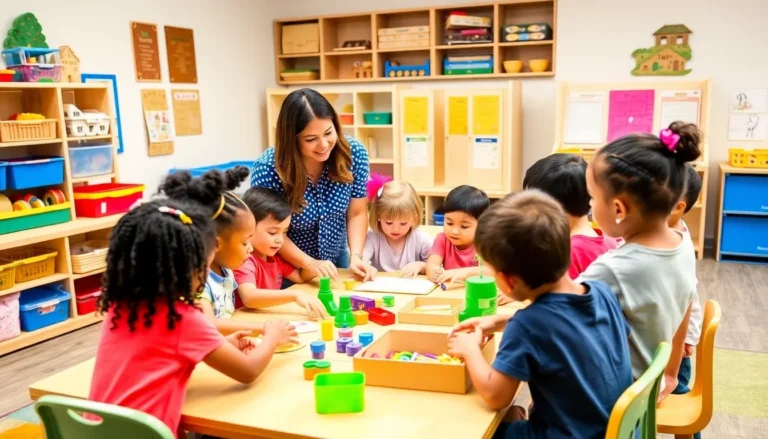
Social interaction often occurs during puzzle play. When children collaborate to solve puzzles, they practice communication and teamwork. Sharing ideas fosters a sense of community while developing interpersonal skills.
Overall, Montessori puzzles provide a multi-faceted approach to education. By integrating play with learning, they ensure children not only enjoy themselves but also achieve developmental milestones.
Benefits Of Montessori Puzzles
Montessori puzzles offer numerous benefits that promote both learning and development. Engaging with these interactive tools supports children’s growth in various aspects.
Enhances Cognitive Skills
Cognitive skills thrive when children manipulate Montessori puzzles. Problem-solving abilities improve as they work through different shapes and patterns. Engagement with vibrant colors and unique designs sparks curiosity, making learning enjoyable. Critical thinking is developed through decision-making processes involved in completing each puzzle. Attention span increases with focused activities that require concentration and perseverance. Children gain spatial awareness from arranging pieces in proper order, which enhances their understanding of dimensions. Progress is evident as they tackle increasingly complex puzzles, reinforcing their cognitive development.
Fosters Independence
Independence flourishes as children explore Montessori puzzles on their own. They take pride in completing puzzles without adult assistance, building self-confidence. It encourages them to make choices and develop personal preferences during playtime. Decision-making skills are sharpened when selecting specific puzzles to solve. Solving puzzles independently also fosters a sense of accomplishment, motivating further exploration and learning. When children face challenges, they learn patience and resilience in finding solutions. This sense of autonomy promotes a lifelong love for learning and discovery.
Types Of Montessori Puzzles
Montessori puzzles come in various forms, each serving unique educational purposes. They engage children in ways that promote learning and development.
Wooden Puzzles
Wooden puzzles represent a classic option in Montessori education. Crafted from high-quality wood, these puzzles feature durable construction that withstands active play. Bright colors and intricate designs captivate children’s attention, fostering engagement. These puzzles encourage fine motor skill development as children grasp and manipulate the pieces. Additionally, they enhance cognitive abilities, such as problem-solving and spatial reasoning, as kids figure out how to fit each piece together. Classic shapes or themed puzzles, like animals and vehicles, stimulate curiosity while reinforcing concepts in a hands-on manner.
Shape Sorting Puzzles
Shape sorting puzzles focus on teaching geometric recognition and differentiation. Each puzzle includes various shapes that challenge children to match and sort them correctly. These activities promote critical thinking and analytical skills. Engaging with these puzzles helps kids understand spatial relationships while developing hand-eye coordination. Through sorting, children learn about categorization and logical reasoning. This type of puzzle also serves as an excellent introduction to early math concepts, making it both educational and entertaining. Brightly colored pieces make learning fun and engaging, keeping children motivated during play.
Choosing The Right Montessori Puzzle
Selecting the right Montessori puzzle involves considering a child’s age, interests, and developmental stage. Age-appropriate puzzles enhance engagement and learning. For toddlers, simple shape sorting puzzles encourage basic recognition and motor skill development. Preschoolers benefit from alphabet and number puzzles that introduce early literacy and math concepts.
Interest plays a crucial role in maintaining a child’s attention. Puzzles featuring animals, vehicles, or nature themes often attract children who have specific passions. Incorporating themes that resonate with a child’s interests creates a more meaningful experience.
Material quality is another vital aspect. Wooden puzzles not only provide durability but also ensure safety during play. High-quality wood withstands wear and tear, making them suitable for frequent use. Vibrant colors found in these puzzles stimulate visual engagement, encouraging exploration.
Consider the complexity of the puzzle as well. Simple puzzles with fewer pieces allow young children to gain confidence as they successfully complete tasks. Gradually introducing more intricate puzzles fosters problem-solving skills and logical reasoning.
Recommended features include sturdy pieces that are easy to grip and manipulate. Smooth edges prevent any potential injuries during play. Collaborative puzzles promote teamwork, enabling children to practice social skills while enjoying shared success with peers.
Finally, check for educational purposes aligned with learning objectives. Puzzles that target specific skills, such as spatial awareness or critical thinking, offer intentional learning opportunities. Montessori puzzles create rich, educational experiences that develop essential skills while allowing children to play and explore.
Tips For Engaging Children With Montessori Puzzles
Selecting the right environment enhances engagement with Montessori puzzles. Create a calm and inviting space free of distractions. Ensuring good lighting and comfortable seating encourages children to focus on their puzzles.
Encouraging self-directed play fosters independence. Allow children to explore puzzles at their own pace while providing support when needed. Promoting autonomy builds confidence and decision-making skills.
Integrating puzzles into daily routines improves learning opportunities. Use puzzle activities during quiet time or as a reward after completing tasks. This scheduled play enhances the educational experience and keeps children motivated.
Incorporating themes based on children’s interests sparks engagement. Choosing puzzles featuring animals, vehicles, or favorite characters captures attention. Personalizing puzzle selection makes learning more enjoyable and relevant for each child.
Demonstrating how to use puzzles promotes understanding. Guiding children through initial attempts gives them the tools to solve puzzles independently later. Encouragement during these moments reinforces their perseverance and intellectual development.
Introducing collaborative puzzle play enhances social skills. Inviting siblings or friends to join in puzzle-solving fosters teamwork and communication. Collaboration teaches children to share and negotiate, building new relationships.
Offering positive reinforcement boosts motivation. Celebrating achievements, no matter how small, encourages a willingness to tackle more challenging puzzles. Providing praise fosters a growth mindset, empowering children to embrace learning experiences.
Balancing challenge and skill level maintains interest. Selecting puzzles that align with children’s developmental stages ensures that tasks remain engaging without becoming frustrating. As confidence grows, gradually increasing complexity further supports skill enhancement.
Montessori puzzles are an invaluable resource for nurturing a child’s development. They blend play with education in a way that captivates young minds while enhancing essential skills. By engaging with these puzzles, children not only enjoy themselves but also build confidence and independence.
The variety of puzzles available ensures that there’s something for every child’s interest and developmental stage. As they tackle challenges and explore new concepts, kids cultivate a lifelong love for learning. Choosing the right puzzle can make all the difference, turning playtime into a meaningful educational experience that lays the foundation for future success.