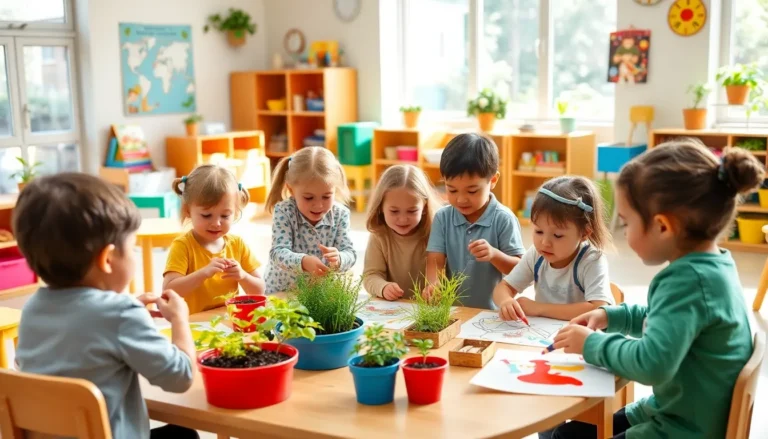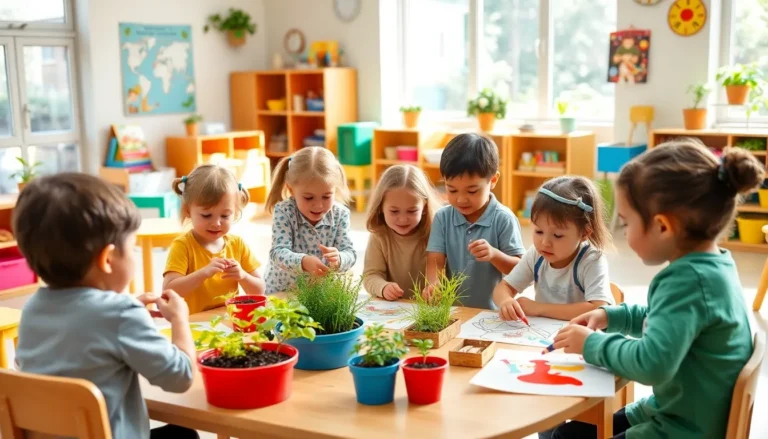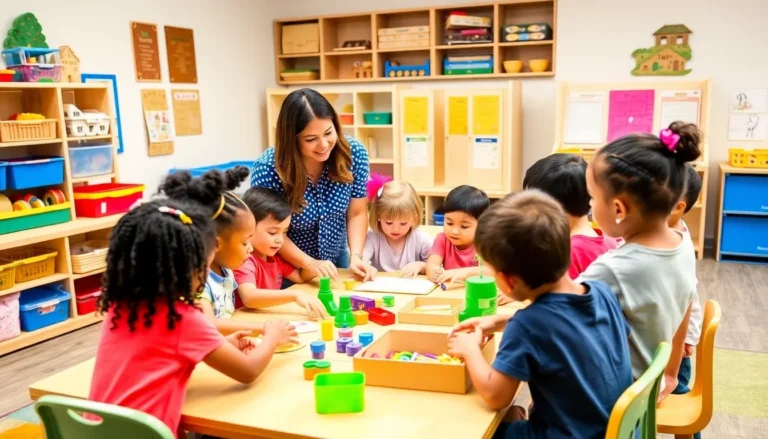
Imagine a classroom where kids aren’t just sitting at desks, but exploring, creating, and discovering their world. Welcome to the vibrant realm of Creative Montessori, where learning transforms into an adventure. This innovative approach combines the principles of Montessori education with the spark of creativity, allowing children to thrive through hands-on experiences and imaginative play.
In the Creative Montessori setting, every day is a chance for little ones to unleash their inner artists, scientists, and explorers. Instead of rote memorization, they engage in activities that stimulate curiosity and critical thinking. Who knew that building a tower with blocks could teach physics, or that painting could spark a lifelong passion for art? With Creative Montessori, the classroom becomes a playground for the mind, fostering not just knowledge but a love for learning that lasts a lifetime.
Table of Contents
ToggleWhat Is Creative Montessori?
Creative Montessori represents an innovative educational framework that expands on traditional Montessori methods. This approach focuses on cultivating creativity and exploration in children. In a Creative Montessori environment, children engage in hands-on activities that stimulate imagination and critical thinking.
Learning spaces are designed to promote interaction and exploration. For instance, children may find art supplies, building materials, and sensory elements readily accessible. These resources allow them to experiment and create independently, fostering a sense of ownership over their learning.
Educators play a crucial role in guiding this exploration. They observe children and provide tailored support that aligns with individual interests and developmental stages. By doing so, they encourage deeper inquiry and self-directed learning.
Creativity thrives in such dynamic environments. Children explore various mediums, like painting, sculpture, or design, which nurtures their unique talents. Collaborative projects often arise, promoting teamwork and social skills.
Assessment in Creative Montessori focuses less on rote memorization and more on children’s processes and outcomes. Recognizing the value of creative work, educators highlight each child’s progress and accomplishments. This holistic perspective further supports children’s overall development.
Creative Montessori transforms education by integrating creativity with traditional Montessori values. Such an approach sparks curiosity, promotes exploration, and shapes lifelong learners committed to their own educational journeys.
Benefits of Creative Montessori
Creative Montessori offers numerous advantages that enrich a child’s educational experience. With a focus on active learning, children benefit from an engaging environment.
Enhancing Cognitive Development
Cognitive development receives a significant boost through hands-on activities. Children build problem-solving skills as they manipulate materials and interact with their surroundings. Early exposure to complex concepts fosters critical thinking and logical reasoning. Engaging in collaborative projects enhances communication skills and teamwork abilities, vital for future success. Observation plays a key role, allowing educators to adapt learning experiences to match individual cognitive growth. Overall, this approach promotes a well-rounded intellectual foundation that prepares children for advanced academic challenges.
Fostering Creativity and Imagination
Creativity and imagination flourish in Creative Montessori settings. Children explore various artistic mediums, allowing for self-expression and innovation. Access to diverse materials encourages experimentation, leading to unique and personal creations. Involvement in creative projects nurtures originality and promotes a love for learning. Group activities often inspire idea-sharing, strengthening social bonds and teamwork. This emphasis on creative exploration prepares children to think outside the box, essential for today’s fast-paced world. Ultimately, fostering these skills cultivates adaptable, innovative thinkers ready to tackle future challenges.
Creative Montessori Methods
Creative Montessori methods prioritize hands-on learning and artistic expression. These methods encourage children to engage with their environment actively, allowing for exploration and discovery.
Hands-On Learning Activities
Hands-on learning activities form the backbone of the Creative Montessori approach. Building with blocks, experimenting with science kits, and engaging in cooking projects enable children to grasp complex concepts through tactile experience. These activities not only promote critical thinking but also foster problem-solving skills, as children navigate challenges independently. Educators observe each child’s progress, offering support when necessary while allowing for freedom in exploration. Active involvement in real-world tasks enhances retention and comprehension, making learning enjoyable and relevant.
Integrating Art and Nature
Integrating art and nature enhances the Creative Montessori experience significantly. Outdoor exploration provides children with opportunities to connect with their surroundings, inspiring creativity. Nature walks, gardening, and outdoor art projects encourage observation and appreciation for the environment. These experiences stimulate imagination and allow children to express their thoughts artistically. Access to various art supplies empowers children to experiment freely, fostering originality. The fusion of nature and creative expression cultivates a holistic educational environment that strengthens both cognitive and emotional development.
Implementing Creative Montessori at Home
Creating a Creative Montessori space at home encourages exploration and imaginative play. First, design environments with open areas for movement and distinct activity zones. Each zone features engaging resources that invite children to explore freely. Materials should remain accessible, inviting children to navigate their learning paths.
Fostering a soothing yet stimulating atmosphere is essential. Incorporate natural light and calming colors to enhance focus. Utilizing shelves at child height allows for easy access to learning tools and supplies. Clearly defined areas promote organization and help children understand their space.
Creating a Montessori Environment
Designing a Montessori environment involves thoughtful arrangement and intentional choices. Arrange furniture to allow for fluid movement and various activities. Craft spaces where creativity thrives and focus is nurtured. Include quiet corners with soft seating for reflective activities. Children engage better in spaces that inspire curiosity and exploration.
Adding elements from nature enriches the environment. Houseplants, natural materials, and sensory items connect children to their surroundings. Encourage indoor gardening or nature displays to foster appreciation for the environment. Dynamic learning spaces prompt children to interact and contribute, maximizing their developmental potential.
Selecting the Right Materials
Choosing the right materials enhances the engaging atmosphere within a Montessori home. Prioritize tools that encourage creativity and exploration, like art supplies and building kits. Offer diverse resources to cater to different interests and developmental levels. Include open-ended materials, such as clay or wooden blocks, to spark imagination.
Quality matters when selecting educational materials. Invest in durable, safe items that withstand active use. Encourage collaborative projects by providing shared resources, fostering teamwork and communication. Neutral colors and natural textures invite children to engage meaningfully, promoting self-directed learning and creativity in everyday activities.
Challenges and Considerations
Implementing Creative Montessori methods presents various challenges. Teacher training and understanding of Montessori principles remain crucial. Not all educators possess the required background, making it essential to invest in professional development. Classroom environments must balance structure with freedom, which can be challenging.
Resource availability often poses another hurdle. Adequate materials for hands-on activities require investment, and some schools may struggle to secure funding. Without diverse resources, children miss opportunities for creative exploration. Furthermore, collaboration among educators strengthens program effectiveness. Shared ideas can enhance the learning experience, but establishing a cohesive team requires ongoing communication.
Parent involvement also plays a significant role. Many parents might not grasp the Creative Montessori philosophy fully, leading to misalignment between home and classroom expectations. Bridging this gap necessitates effective outreach and education for families. Additionally, assessment practices shift from traditional testing to evaluating individual processes and outcomes. Such changes can create discomfort among educators accustomed to conventional metrics.
Time management represents another crucial factor. While exploration takes time, educators must also meet curriculum requirements. Striking a balance between free exploration and structured learning can be challenging. Adapting to these practices demands patience and flexibility from all parties involved.
Ultimately, cultivating an effective Creative Montessori environment requires careful planning and consideration. Balancing creativity, resource availability, and educator training ensures success.
Creative Montessori represents a transformative approach to education that prioritizes creativity and exploration. By fostering an engaging environment where children can actively participate in their learning, this method nurtures critical thinking and problem-solving skills.
The emphasis on hands-on activities and collaboration not only enhances cognitive development but also prepares children for future challenges. Implementing Creative Montessori principles at home or in the classroom can significantly enrich children’s educational experiences.
As educators and parents embrace this innovative philosophy, they contribute to shaping adaptable and imaginative learners who are ready to thrive in an ever-changing world.