

When it comes to keeping infants and toddlers entertained, parents often feel like they’re in a never-ending game of peekaboo. The good news? Engaging activities can turn those giggles into hours of fun while also boosting their development. From sensory play that stimulates tiny brains to creative crafts that unleash budding Picassos, there’s a world of possibilities waiting to be explored.
Importance of Activities for Infants and Toddlers
Engaging infants and toddlers in activities plays a crucial role in their overall development. These activities stimulate cognitive growth, enhance motor skills, and promote social interaction. For example, sensory play with various textures and materials allows children to explore their environment actively.
Creative crafts foster imagination while developing fine motor skills. Activities that encourage movement, like dancing or playing with balls, advance gross motor skills and physical coordination. Additionally, interactive games strengthen language skills as children learn to communicate and express themselves.
Routine participation in activities boosts emotional well-being. Children gain confidence through accomplishment, whether stacking blocks or completing a simple craft. Social activities, like group play dates, promote cooperation, sharing, and empathy among peers.
Research indicates that varied experiences contribute to brain development significantly during the first few years of life. Structured and unstructured play aids problem-solving skills and critical thinking capabilities. Playing with others teaches essential life skills, such as patience and teamwork.
Parents and caregivers contribute to this development by providing diverse and engaging experiences. Exploring different activities keeps children interested and motivated. Selecting age-appropriate options ensures safety while maximizing educational value.
Limiting screen time and promoting interactive play significantly benefits young children. Engaging with parents in hands-on activities strengthens the parent-child bond. Prioritizing these experiences nurtures a strong foundation for lifelong learning and social skills.
Types of Activities
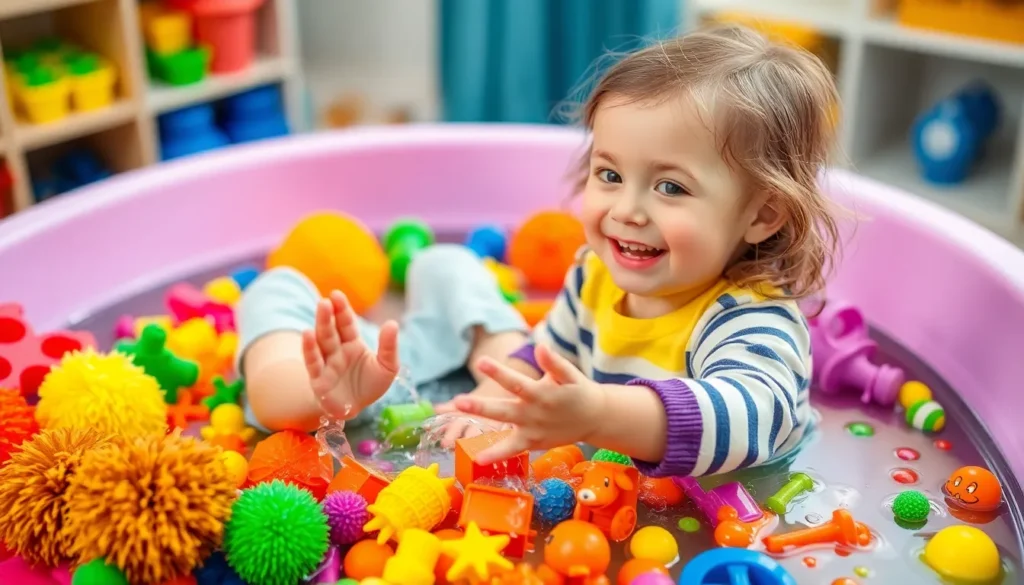
Engaging infants and toddlers in various activities enhances their growth and development. Activities can be categorized into sensory play, creative arts, and physical activities.
Sensory Play
Sensory play stimulates a child’s senses through exploration. Materials like water, sand, and textures provide opportunities for hands-on learning. Children benefit from activities such as water tables and sensory bins, which promote curiosity and experimentation. Combining different materials keeps the experience fresh and exciting. This type of play aids in cognitive development and fine motor skills, helping young ones learn cause and effect. Parents can create simple sensory activities using household items, turning ordinary days into fun learning opportunities.
Creative Arts
Creative arts foster imagination and expression in young children. Activities like painting, drawing, and crafting encourage innovative thinking and creativity. Using non-toxic, washable materials ensures safety while children explore their artistic abilities. Parents can involve toddlers in simple projects, such as finger painting or collage-making. These activities help develop fine motor skills, hand-eye coordination, and confidence. By creating an arts-and-crafts area at home, caregivers provide a space where young ones can unleash their creativity and express their feelings.
Physical Activities
Physical activities are crucial for developing gross motor skills and coordination. Activities like crawling, climbing, and dancing contribute to physical fitness and agility. Establishing routines, such as playdates or family walks, encourages movement in a fun way. Playing with balls, tossing bean bags, or setting up obstacle courses keeps children active and engaged. Caregivers can adapt physical play to the environment, ensuring safety and accessibility. Consistent involvement in these activities promotes healthy habits and strengthens muscle development, laying the foundation for future physical endeavors.
Tips for Engaging Activities
Engaging activities are fundamental for the growth of infants and toddlers. They provide opportunities for exploration, creativity, and learning.
Safety Considerations
Safety remains a top priority when selecting activities for young children. Always choose materials that are non-toxic and free of choking hazards. Regularly inspect toys for wear and tear to prevent accidents. Parents should supervise all activities, ensuring a safe environment for exploration. Soft surfaces and age-appropriate equipment contribute to a lower risk of injury. Clear space for movement helps promote safe, dynamic play. Establishing safety rules can prepare children for engaging with new activities appropriately.
Tailoring Activities to Age
Tailoring activities to age significantly enhances their effectiveness. Infants benefit from sensory experiences like tactile toys and soft play mats. These activities should stimulate their developing senses while encouraging exploration. For toddlers, introduce more complex tasks such as sorting and simple puzzles, which foster cognitive and fine motor skills. Music and movement activities engage toddlers’ growing physical abilities, promoting balance and coordination. Adjusting the difficulty level based on developmental milestones helps create a more satisfying and enriching experience for each child. Understanding their capacities allows for effective and enjoyable activities.
Benefits of Early Engagement
Engaging infants and toddlers in activities brings significant developmental advantages. Early participation enhances cognitive growth, aiding problem-solving and critical thinking skills. Activities stimulate curiosity through hands-on exploration, fostering a deeper understanding of their surroundings.
Motor skills develop through a variety of activities. Fine motor skills strengthen with creative arts such as painting or sculpting, while gross motor skills improve via physical play like crawling and dancing. Movement promotes coordination and balance, essential for future physical activities.
Social interaction occurs naturally during engaging play. Children learn cooperation, empathy, and communication skills through shared experiences with peers and caregivers. These fundamental social skills form the basis for positive relationships and group dynamics.
Emotional well-being benefits from regular engagement in structured activities. Children gain confidence and self-esteem as they master new skills. They also learn to express feelings and ideas through creative outlets, contributing to overall emotional health.
Research underscores the importance of varied experiences. Engaging in different types of play stimulates multiple areas of brain development. Incorporating sensory experiences, creative tasks, and physical challenges promotes a well-rounded foundation for lifelong learning.
Parents and caregivers play a pivotal role by providing diverse, age-appropriate activities. Tailoring engagement to suit developmental milestones ensures children receive both safety and educational richness. Prioritizing hands-on experiences over screen time strengthens the parent-child bond, nurturing trust and communication.
Ultimately, consistent involvement in engaging activities lays the groundwork for children’s growth and development. Supporting exploration, creativity, and learning results in a holistic approach to early childhood development.
Engaging infants and toddlers in a variety of activities is essential for their overall development. By focusing on sensory play creative arts and physical activities parents can create a rich environment that nurtures growth and learning. These experiences not only entertain but also build crucial skills that will benefit children throughout their lives.
The journey of exploration and creativity fosters a strong bond between parents and their children. As they participate in age-appropriate activities together they lay the groundwork for a lifetime of curiosity and learning. Prioritizing hands-on experiences over screen time ensures that children thrive in a dynamic and supportive atmosphere. Embracing these activities is a powerful investment in a child’s future.