

In a world where toys often come with flashy lights and endless sounds, baby Montessori toys stand out like a breath of fresh air. These gems are designed to foster independence and creativity in little ones, allowing them to explore and learn at their own pace. Forget about the plastic noise machines; it’s time for your baby to embrace the beauty of simplicity.
What Are Baby Montessori Toys?
Baby Montessori toys serve a specific purpose in child development. These toys encourage hands-on learning and foster a child’s ability to explore independently. Unlike conventional toys, Montessori options are typically simple and made from natural materials, providing sensory-rich experiences.
Wooden blocks, stacking toys, and shape sorters exemplify common types of baby Montessori toys. Each design features bright colors and organic shapes that capture attention without overwhelming a child. Additionally, these toys often come with interchangeable components that allow for creative play while enhancing problem-solving skills.
Promoting fine motor skills is vital in a child’s early development stage. Tools such as grasping beads or simple puzzles help strengthen hand-eye coordination. When babies manipulate these items, they gain confidence in their abilities, which supports early learning.
Montessori toys also emphasize open-ended play. Items that can be used in various ways encourage imagination and adaptability. For example, a simple wooden cube might serve as a ball, a building block, or part of a pretend play scenario.
Environmental impact matters. Baby Montessori toys often come from sustainable sources, reflecting a commitment to eco-friendly practices. Parents appreciate this focus, as it aligns with their values for healthy play.
Baby Montessori toys stand out due to their intentional designs that promote independence, creativity, and learning. These toys equip children with foundational skills for future growth and development.
Benefits of Baby Montessori Toys
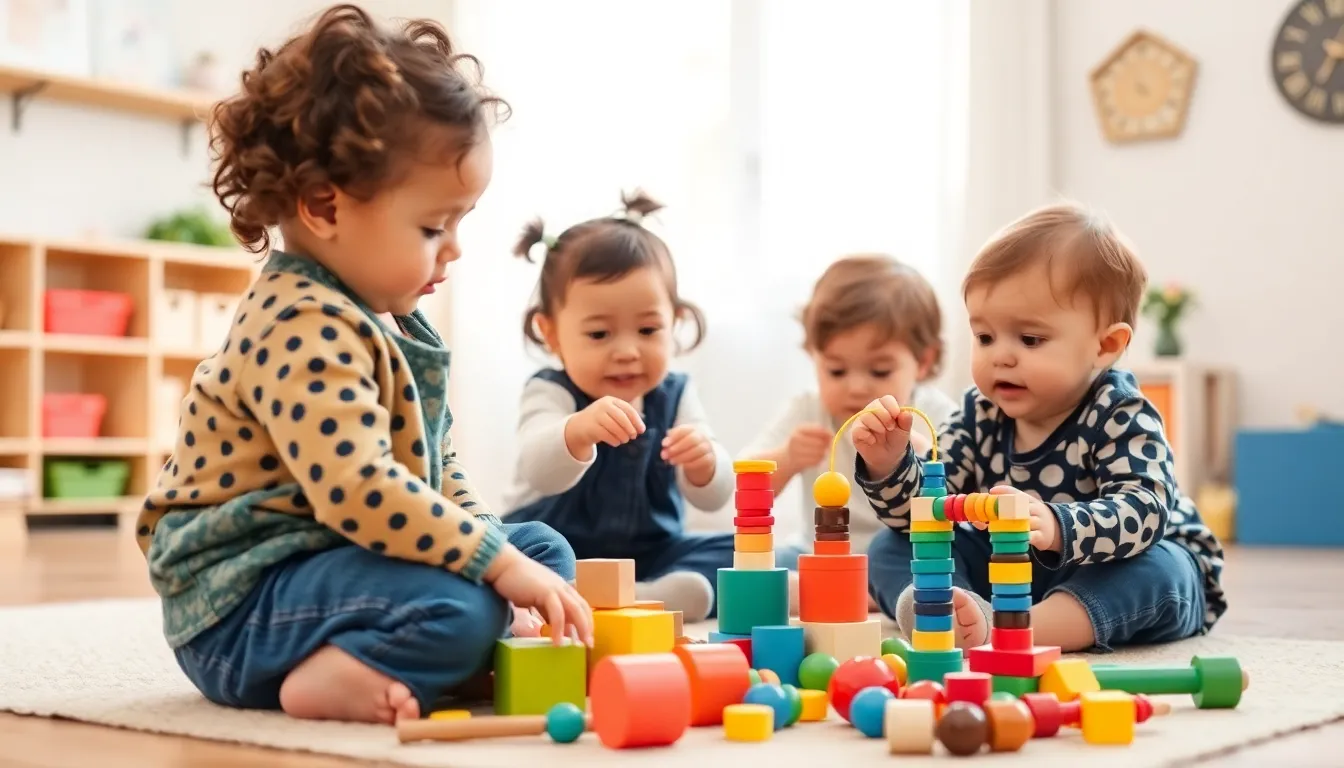
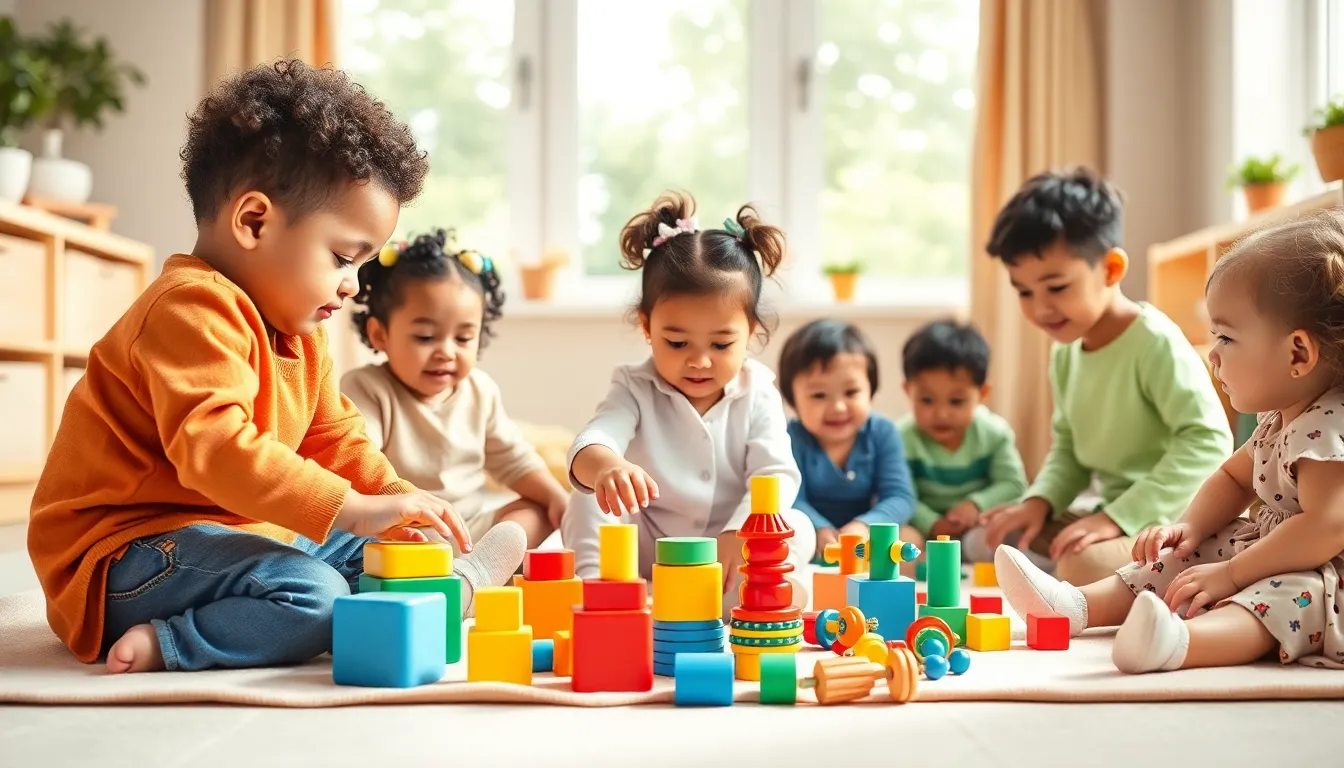
Baby Montessori toys offer various developmental benefits, enhancing both play and learning through intentional design. Each toy encourages growth across multiple domains.
Encouraging Independent Play
Independent play forms the foundation of a child’s self-confidence and problem-solving skills. Baby Montessori toys invite exploration without direct adult supervision. By engaging with these toys, a child learns to make decisions, fostering creativity. Choices in play promote a sense of ownership, allowing for personalized experiences. Sensory-rich designs enable children to explore their environment while developing autonomy.
Enhancing Motor Skills
Motor skill development becomes a priority with baby Montessori toys. These toys, such as grasping beads and stacking blocks, support fine motor skill enhancement. Coordinated movements strengthen hand-eye coordination as children manipulate various shapes and materials. Engaging with simple puzzles encourages practice with grasping, twisting, and placing. Each action fosters dexterity, essential for future tasks like writing and self-care.
Fostering Cognitive Development
Cognitive development thrives with the use of baby Montessori toys. Open-ended play encourages critical thinking and problem-solving abilities. Children explore concepts like cause and effect through interactive play, engaging their curiosity. Bright colors and diverse shapes stimulate visual recognition and categorization skills. These toys set the stage for fundamental learning, building a child’s ability to think, reason, and imagine.
Choosing the Right Baby Montessori Toys
Selecting suitable baby Montessori toys involves careful consideration of several factors. Prioritizing age appropriateness ensures that chosen toys match a child’s developmental stage, promoting effective engagement and learning.
Age Appropriateness
Choosing toys that align with a child’s age fosters optimal development. Infants thrive with simple rattles and soft, graspable toys, while toddlers benefit from stacking and sorting options. Babies aged six to twelve months explore cause-and-effect toys that allow experimentation. At this stage, wooden blocks provide tactile feedback and stimulate curiosity. Finding age-appropriate toys supports milestones in motor skills and cognitive development.
Material Safety
Prioritizing material safety guarantees a secure play environment. Selecting toys made from non-toxic, natural materials, such as wood or organic cotton, minimizes exposure to harmful chemicals. Avoiding plastic toys that contain BPA or phthalates enhances safety. Additionally, opting for smooth, well-crafted surfaces prevents potential injuries. Thoroughly checking for any small parts in toys also ensures they are safe for babies. Emphasizing safety in toy selection provides peace of mind for parents while supporting healthy play experiences.
Popular Types of Baby Montessori Toys
Baby Montessori toys are designed to engage children through practical, hands-on experiences. Various types cater to different developmental needs and preferences.
Wooden Toys
Wooden toys feature natural materials that encourage exploration and creativity. These toys often come in simple shapes and bright colors, engaging a child’s senses. Activities such as stacking and grasping help enhance fine motor skills. Blocks, puzzles, and cars offer diverse play options, promoting independent thinking. Many manufacturers prioritize sustainability, ensuring that these toys are eco-friendly and safe for babies.
Sensory Toys
Sensory toys provide rich tactile experiences, stimulating a child’s curiosity. Textures, sounds, and colors all play a role in encouraging exploration. Rattles, soft-textured balls, and crinkly fabric toys capture attention while promoting sensory development. Engaging with these toys aids in the development of cognitive and motor skills, giving babies the opportunity to experiment and learn through their senses. Parents can feel confident knowing these toys support healthy sensory growth.
Stackable and Nesting Toys
Stackable and nesting toys facilitate critical thinking and problem-solving skills. These toys encourage children to experiment with balance and size as they learn to stack or nest. Options such as cups, rings, and blocks inspire imaginative play. Customizable and adaptable, these toys allow for varied uses based on a child’s interests. Engaging with stackable and nesting toys strengthens fine motor skills while giving adults peace of mind about safe play experiences.


