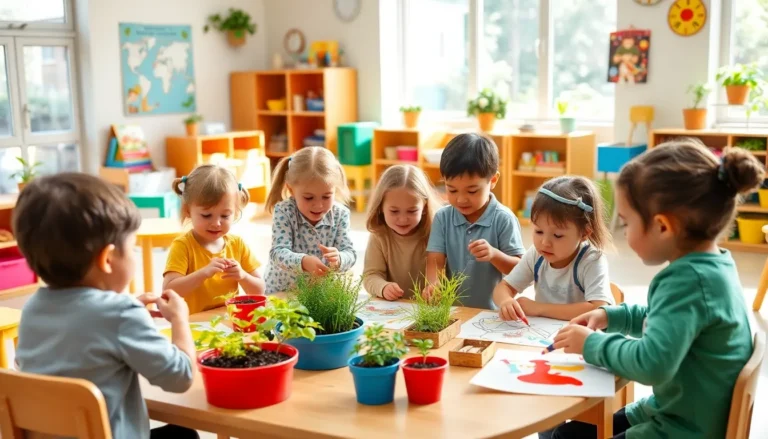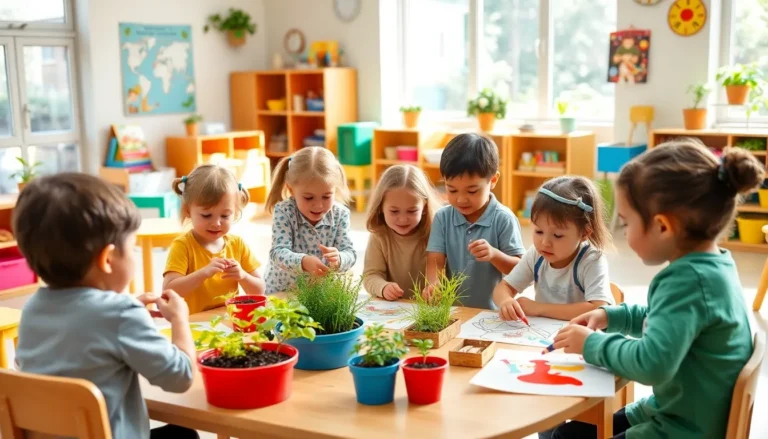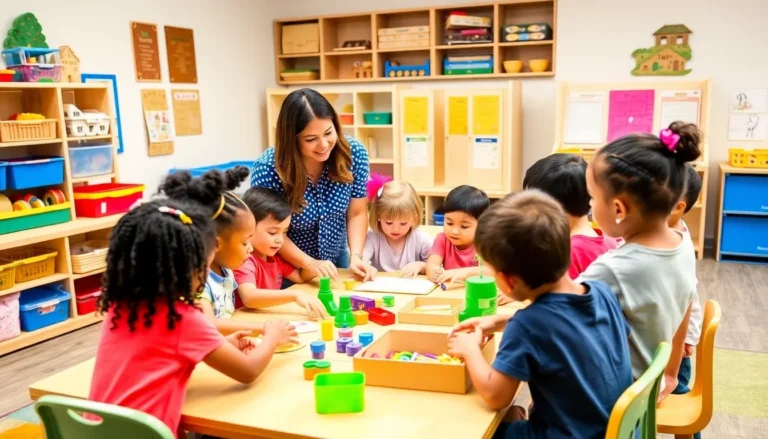

In a world where screens reign supreme, Montessori learning toys offer a delightful escape into hands-on discovery. These toys aren’t just colorful distractions; they’re carefully crafted tools designed to ignite curiosity and foster independence in young minds. Imagine a toy that not only entertains but also teaches your little one to problem-solve and think critically—sounds like magic, right?
Table of Contents
ToggleOverview of Montessori Learning Toys
Montessori learning toys focus on nurturing a child’s natural instincts to explore and learn. These toys are designed to align with the Montessori philosophy, emphasizing hands-on experiences. Children engage with materials that cater to various developmental stages, promoting independence and critical thinking.
Materials used in Montessori toys include wood, fabric, and natural elements. These materials enhance sensory experiences while ensuring durability. Open-ended designs encourage creativity, allowing children to explore different possibilities during play.
Specific types of Montessori toys include stacking blocks, sensory bins, and puzzles. Stacking blocks aid in developing fine motor skills and spatial awareness. Sensory bins introduce children to different textures and materials, fostering imaginative play.
Puzzles improve problem-solving abilities, as children figure out how to fit pieces together. Each toy targets specific developmental goals while maintaining an element of enjoyment. Montessori learning toys cultivate a love for learning by making education engaging and interactive.
Parents and educators appreciate the educational value of these toys. They recognize the importance of supporting children’s development through play. Investing in Montessori toys can lead to long-term benefits, including enhanced cognitive, social, and emotional skills.
Choosing the right Montessori toys involves considering a child’s interests and developmental needs. Selecting age-appropriate materials ensures effective learning experiences. By prioritizing engagement and hands-on interaction, Montessori learning toys provide an enriching environment for young learners.
Benefits of Montessori Learning Toys
Montessori learning toys offer numerous advantages for child development. They support various learning styles and foster a passion for exploration.
Cognitive Development
Cognitive development accelerates with Montessori learning toys, as they promote independent thinking. Toys like puzzles challenge children to think critically and solve problems. Stacking blocks encourage spatial reasoning and logical thought processes. Engaging with these toys strengthens memory and enhances attention spans. Through open-ended play, children explore concepts like cause and effect, laying the groundwork for future academic success.
Motor Skills Enhancement
Motor skills enhancement is a key benefit of Montessori learning toys. Toys such as sensory bins encourage tactile exploration, refining fine motor skills through manipulation. Building with stacking blocks develops hand-eye coordination essential for tasks like writing. Additionally, puzzles target dexterity, allowing children to practice grasping and positioning pieces. Focusing on these skills fosters confidence as kids master new abilities and develop a sense of achievement during play.
Types of Montessori Learning Toys
Montessori learning toys come in various forms, each designed to support unique aspects of child development. Understanding the different types allows for informed choices that align with children’s interests and developmental needs.
Wooden Toys
Wooden toys exemplify durability and timelessness. These toys provide tactile experiences that engage children’s senses effectively. Examples include building blocks and shape sorters, which target fine motor skills and spatial awareness. The solid construction withstands rough play, ensuring longevity. Many wooden toys feature natural finishes, promoting safe, open-ended play. Therefore, opting for wooden Montessori toys fosters imaginative play and offers opportunities for creative exploration.
Sensory Toys
Sensory toys focus on engaging children’s senses through texture, sound, and visual stimulation. These toys, such as sensory bins filled with rice or beads, encourage hands-on exploration, allowing children to discover different materials. Exploring these textures supports cognitive development and fosters curiosity. Additionally, toys featuring various sensory elements, like crinkly fabrics or soft textures, enhance tactile experiences. Consequently, incorporating sensory toys into play routines can strengthen children’s sensory processing skills.
Educational Kits
Educational kits provide structured activities designed to promote skill development in various subjects. These kits often include materials for learning math, science, or language skills. Examples consist of counting games, science experiments, and literacy activities that capture children’s attention. Each kit encourages independent exploration, allowing kids to learn at their own pace. Moreover, educational kits typically contain clear instructions, fostering problem-solving abilities and critical thinking. Thus, utilizing these kits supports a well-rounded educational experience in a playful manner.
Choosing the Right Montessori Learning Toys
Selecting appropriate Montessori learning toys involves careful consideration of a child’s interests and developmental stages. Parents should assess their child’s age and abilities, ensuring toys align with their specific needs. Open-ended toys encourage creative exploration and adaptable play, making them suitable for various age groups.
Toys such as stacking blocks and puzzles enhance fine motor skills and problem-solving abilities. Many parents find that while some toys target specific skills, others promote general development. Engaging with sensory bins stimulates imagination and fosters tactile learning experiences, catering to diverse learning styles.
Quality materials like wood and fabric often appeal to children and support durability. Choosing toys made from sustainable resources contributes to eco-friendly practices, adding an educational component about environmental responsibility. Many Montessori toys feature simple designs, allowing for extended engagement and encouraging independent play.
Evaluating a toy for educational value can further guide selection. Toys that challenge critical thinking and promote cognitive development serve to enhance memory and focus. Observing children play with different toys offers insights into what captivates their attention.
Incorporating variety ensures children are exposed to multiple skills and concepts. Mixing types of toys, such as those that promote math and science skills alongside creative activities, boosts overall development. Making informed choices leads to enriched play experiences that cultivate a lifelong love for learning.
Popular Brands and Recommendations
Selecting quality Montessori learning toys often leads to discovering reputable brands. Some popular brands include Melissa & Doug, known for their durable wooden toys that stimulate creativity. Hape specializes in eco-friendly materials, offering products designed to enhance problem-solving skills. PlanToys provides a wide range of beautifully crafted wooden toys that align with Montessori principles, encouraging open-ended play.
Parents often recommend Green Toys for their commitment to sustainability. Each toy is made from recycled materials, ensuring a safe play environment. Additionally, Tegu offers magnetic wooden blocks that inspire creativity and critical thinking. Their unique design allows for endless building possibilities, fostering imaginative play.
Exploring specific toys within these brands provides insight into effective learning tools. For instance, Hape’s stacking blocks enhance fine motor skills and spatial awareness. Melissa & Doug’s puzzles improve concentration and problem-solving abilities. Sensory bins from PlanToys offer tactile experiences that refine sensory processing skills.
When considering recommendations, look for toys that adapt as children grow. Open-ended toys like Tegu magnetic blocks remain engaging across various developmental stages. Green Toys’ building sets also provide versatility, encouraging exploration and cooperative play among children.
Investing in these identified brands introduces high-quality Montessori learning toys into playtime activities. Each brand provides a unique angle on educational objectives, making them valuable resources for parents and educators alike. Choose those that resonate with a child’s interests and foster a love for learning through interactive and engaging experiences.
Montessori learning toys offer a unique approach to child development that fosters independence and creativity. By engaging young minds through hands-on experiences, these toys support essential skills like problem-solving and critical thinking.
The thoughtful design and quality materials ensure durability while enhancing sensory experiences. Parents and educators can confidently select from a variety of options that cater to children’s developmental needs, ensuring that playtime remains enriching and educational.
Investing in these toys not only nurtures a love for learning but also lays a strong foundation for cognitive, social, and emotional growth. Embracing the Montessori philosophy through play can transform how children learn and explore the world around them.