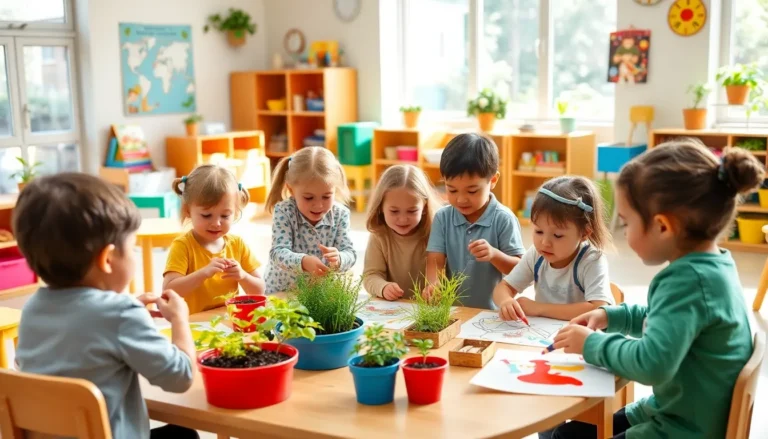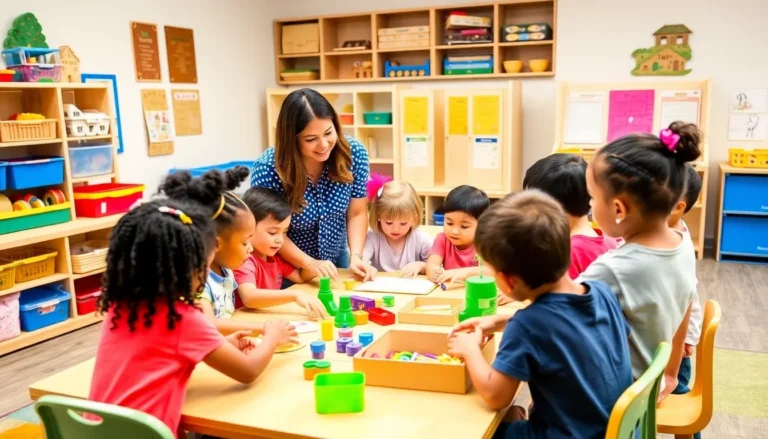

The Montessori method has transformed early childhood education, offering a unique approach that fosters independence and curiosity. Developed by Dr. Maria Montessori over a century ago, this educational philosophy emphasizes hands-on learning and self-directed activity. It encourages children to explore their interests at their own pace, creating a lifelong love for learning.
In a Montessori classroom, children engage with specially designed materials that promote critical thinking and problem-solving skills. This method respects each child’s individual development, allowing them to thrive in an environment that nurtures their natural abilities. By understanding the core principles of the Montessori method, parents and educators can better support children’s growth and development, paving the way for future success.
Overview of the Montessori Method
The Montessori method emphasizes independence, hands-on learning, and self-directed activities. This approach nurtures children’s natural curiosity, allowing for tailored educational experiences.
Key Principles of Montessori Education
Montessori education revolves around multiple core principles:
- Child-Centered Learning: Children lead their own learning paths, choosing activities that interest them, fostering intrinsic motivation and engagement.
- Prepared Environment: Classrooms are designed with accessible materials that promote exploration and discovery, ensuring children can interact with their surroundings effectively.
- Multi-Age Grouping: Mixed-age classrooms encourage collaboration, peer learning, and mentorship, offering children the opportunity to learn from one another.
- Hands-On Learning: Montessori uses tactile learning materials that support sensory exploration, helping children understand abstract concepts through concrete experiences.
- Respect for Individual Development: The method recognizes that every child develops at their own pace, allowing for personalized learning experiences that cater to each child’s unique needs.
Historical Background
The Montessori method originated in the early 1900s, developed by Dr. Maria Montessori, an Italian physician and educator. Her observations of children’s natural learning processes informed the creation of the method. In 1907, she opened the first Casa dei Bambini (Children’s House) in Rome, focusing on educating underprivileged children. The method gained international recognition, spreading to schools worldwide. Today, Montessori schools operate in over 110 countries, implementing her principles and innovations in early childhood education.
Structure of Montessori Classrooms
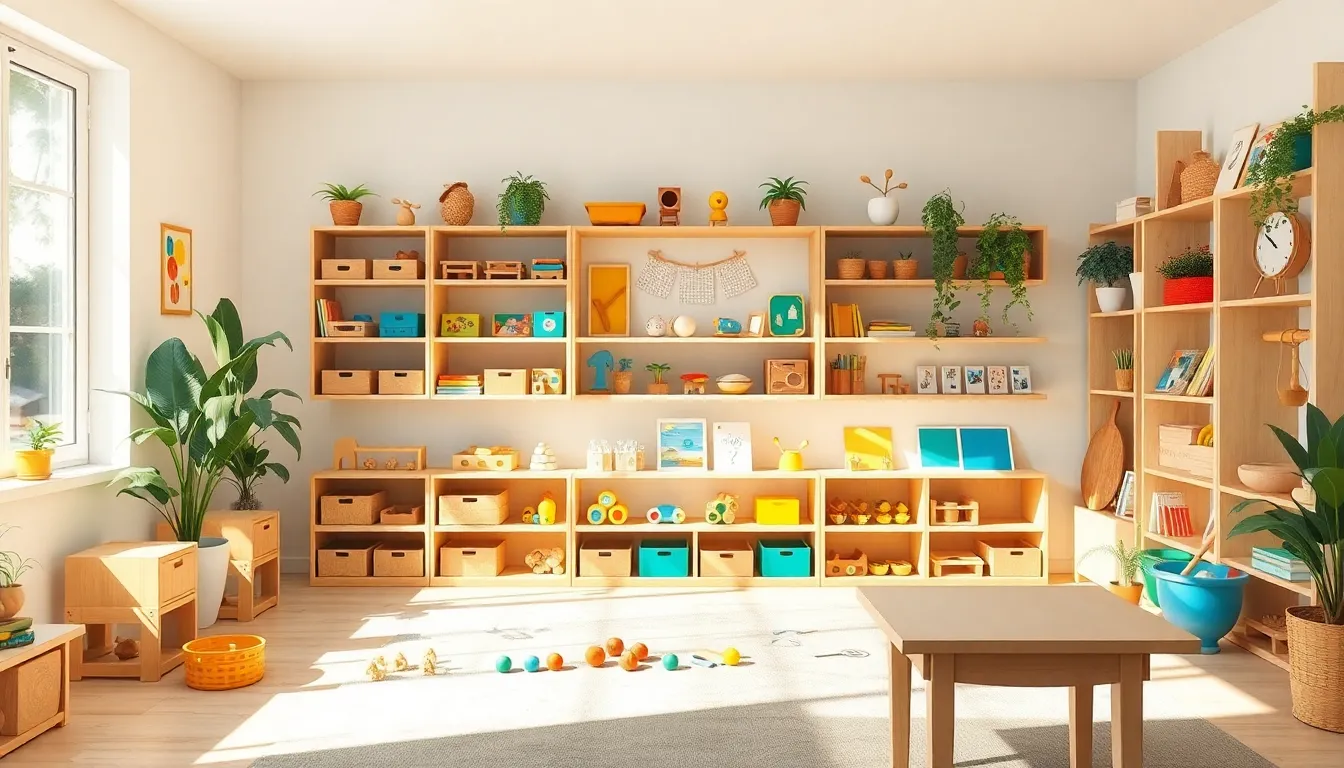
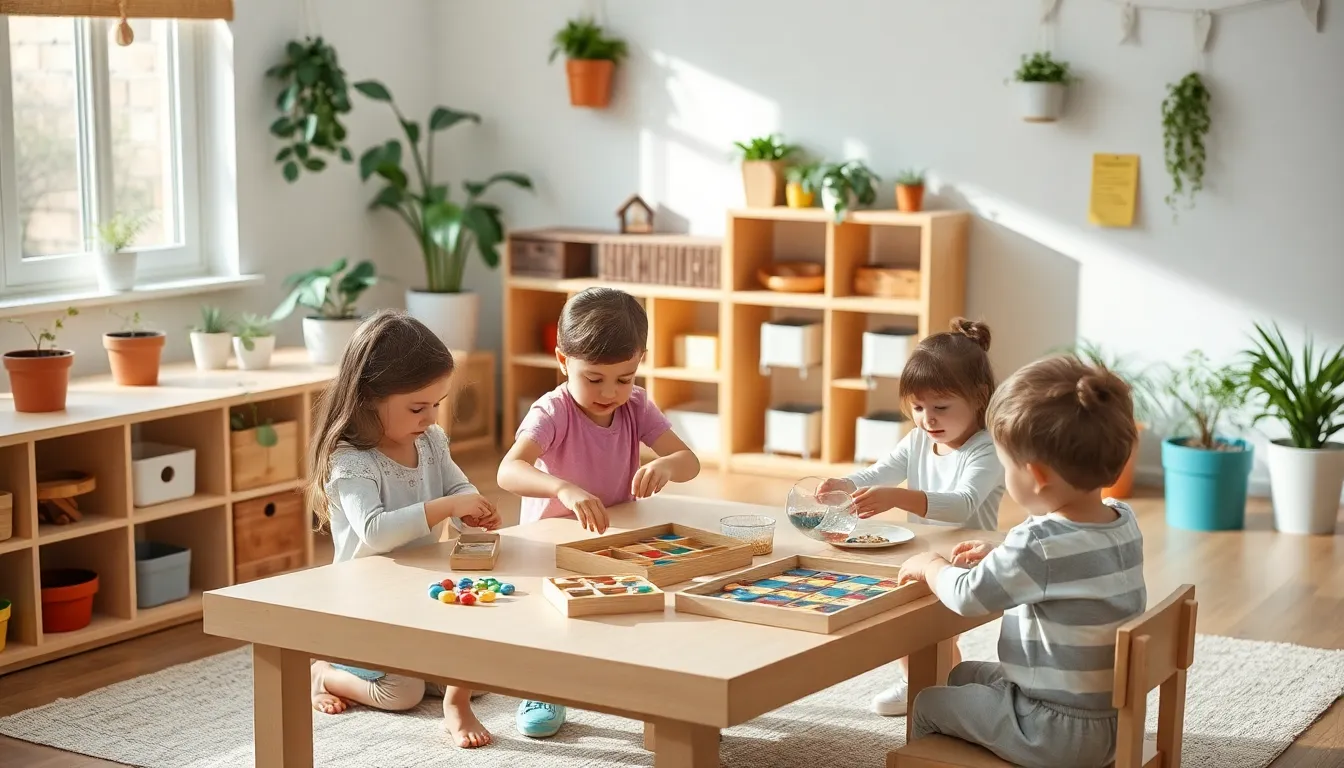
Montessori classrooms are carefully designed environments that promote independent learning and exploration. These spaces encourage children to engage with a variety of materials and activities suited to their developmental needs.
Learning Materials and Environment
Montessori classrooms feature specialized learning materials that support various developmental stages. These materials include tactile tools, practical life activities, and sensorial experiences. Each item is purposefully placed within the classroom to maximize accessibility and promote active engagement.
Materials vary in complexity, allowing children to progress at their own pace. For example:
- Practical Life Materials: Items like pouring and sorting activities help children develop motor skills and independence.
- Sensorial Materials: Tools such as color tablets and sound boxes enhance sensory perception and classification skills.
- Mathematical Materials: Montessori beads and counting tools introduce mathematical concepts through hands-on learning.
The environment itself is orderly, inviting, and scaled to the children’s size to foster autonomy. Classrooms typically maintain a natural aesthetic, incorporating elements like plants and natural lighting to create a calming atmosphere.
Role of the Educator
In a Montessori classroom, the educator acts as a guide rather than a traditional teacher. This role includes observing children to identify their interests, facilitating activities, and providing support when necessary. Key responsibilities include:
- Individualized Support: Educators tailor experiences based on each child’s unique interests and developmental pace.
- Facilitation: Educators encourage exploration and discovery by presenting materials and allowing children to choose their activities.
- Observation: Continuous observation helps educators assess learning progress and adapt the environment accordingly.
This approach fosters a sense of community and collaboration among children, encouraging them to learn from one another while developing critical social skills. The educator’s presence is subtle yet impactful, promoting an atmosphere of respect and curiosity.
Age Groups and Learning Stages
Montessori education spans various age groups, aligning learning stages with children’s developmental needs. The method supports continuous growth from early childhood through elementary education.
Early Childhood Education
Early childhood spans ages 2.5 to 6 years. During this stage, children engage in activities that cultivate language, motor skills, and social interaction. Montessori classrooms provide a range of materials designed to develop practical life skills, sensory exploration, and basic mathematical concepts. Children learn through hands-on experiences, encouraging independence and self-discipline. Multi-age classrooms promote collaboration, allowing younger children to learn from older peers while reinforcing older children’s understanding through teaching.
Elementary Education
Elementary education encompasses ages 6 to 12 years. This stage focuses on expanding children’s intellectual capacities and fostering critical thinking. Montessori elementary environments encourage inquiry-based learning, where students explore diverse subjects such as science, history, and arts through projects and collaborative tasks. The curriculum is tailored to individual interests, allowing deeper engagement and motivation. Children work in a mixed-age setting, which promotes a sense of community and shared responsibility, further enhancing social skills and teamwork.
Benefits of the Montessori Method
The Montessori method offers numerous benefits that contribute to a child’s growth and education. This approach emphasizes individualized learning, fostering autonomy, and nurturing a love for learning.
Child-Centered Learning
Child-centered learning forms the core of the Montessori method. It allows children to select activities that interest them, promoting intrinsic motivation and engagement. Through this approach, children develop critical thinking skills and enhance their ability to make decisions independent of external pressures. Educators create personalized learning experiences, tailoring lessons to fit each child’s unique pace and learning style. This individual focus cultivates confidence and a sense of ownership in their education.
Development of Independence
The development of independence is a key benefit of the Montessori method. Children in Montessori environments engage in self-directed activities, promoting autonomy and self-reliance. They learn to take responsibility for their choices, actions, and learning. Such experiences encourage problem-solving skills and resilience. As children manage their tasks and navigate challenges, they build a strong foundation for lifelong learning and personal accountability. This independence not only fosters cognitive growth but also enhances social interactions and collaborative skills among peers.
Critiques and Limitations
While the Montessori method has garnered widespread support, critiques and limitations exist that warrant consideration. Some challenges and misconceptions can influence how the method is perceived and implemented.
Common Misconceptions
Misunderstandings about the Montessori method can lead to misapplication. One misconception is that Montessori education lacks structure. In reality, it emphasizes a well-prepared environment and intentional guidance from educators. Another myth suggests that children do not receive direct instruction. Instead, teachers provide individualized support when necessary, facilitating learning while allowing children to explore at their own pace. Additionally, some believe that Montessori education is solely for gifted children, overlooking its benefits for diverse learners in various educational settings.
Challenges in Implementation
Implementing the Montessori method incurs certain challenges. Training educators in Montessori principles requires significant investment, and not all institutions can meet this need. Limited access to quality training can lead to inconsistent application of the method. Another challenge involves securing appropriate classroom materials, which can be costly and sometimes unavailable. Lastly, integrating the Montessori approach into traditional educational systems poses difficulties. These systems may favor standardized testing and rigid curricula, contrary to Montessori’s flexibility and child-centered focus. As a result, schools may struggle to balance established frameworks with Montessori’s innovative practices.