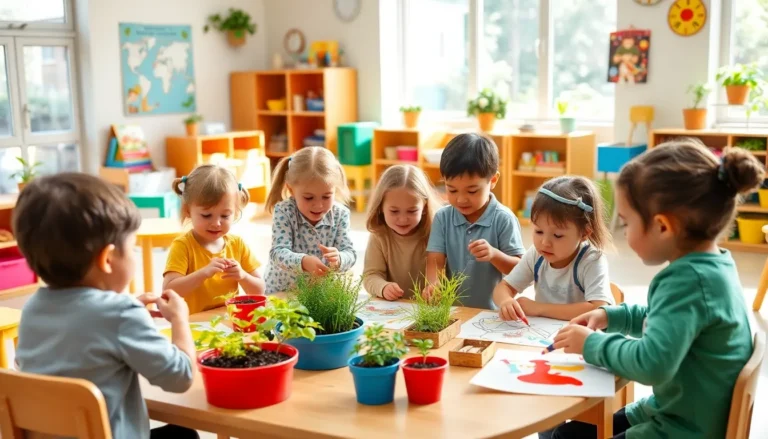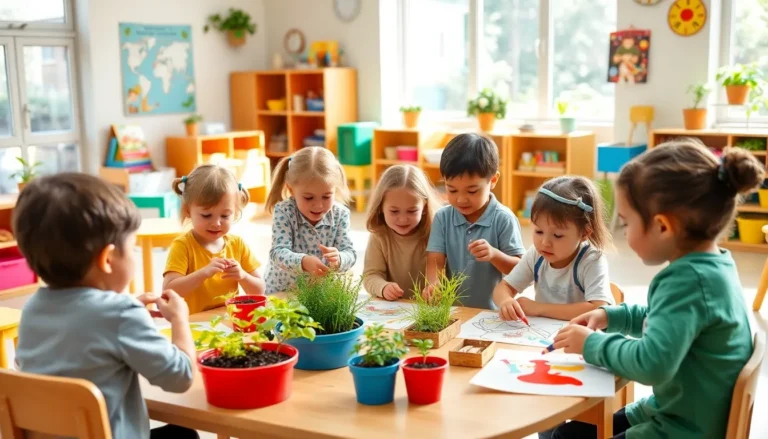

Montessori teaching methods have transformed the landscape of education, emphasizing child-led learning and hands-on experiences. Developed by Dr. Maria Montessori over a century ago, this approach nurtures a child’s natural curiosity and fosters independence, allowing them to explore at their own pace.
In a Montessori classroom, the environment is carefully designed to encourage exploration and discovery. Children engage with specially crafted materials that promote critical thinking and problem-solving skills. This method not only cultivates a love for learning but also instills essential life skills, making it a popular choice for parents and educators alike. As the world evolves, the principles of Montessori continue to resonate, proving that education can be both effective and enjoyable.
Overview of Montessori Teaching Methods
Montessori teaching methods center on child-led learning experiences that promote independence and curiosity. Developed by Dr. Maria Montessori, these methods focus on creating a prepared environment conducive to exploration and discovery.
Key principles include:
- Child-Centered Learning: Learning occurs at the child’s own pace, fostering individual growth and an intrinsic love for knowledge.
- Hands-On Activities: Multi-sensory materials invite active engagement and experimentation, enhancing cognitive development.
- Mixed-Age Classrooms: Learners of different ages work together, facilitating peer learning and social skills.
- Teacher as Guide: Educators act as facilitators rather than traditional instructors, nurturing independence and self-motivation.
- Focus on Life Skills: Curriculum encompasses practical skills alongside academics, preparing children for real-world challenges.
Montessori environments are meticulously designed to support individualized learning paths, ensuring that each child can explore topics of interest while developing essential problem-solving abilities. The approach cultivates critical thinking through hands-on materials that encourage exploration and discovery.
Key Principles of Montessori Education

Montessori education is built on several foundational principles that promote effective learning. These principles support child development and foster a love for learning.
Child-Centered Learning
Child-centered learning prioritizes the needs and interests of the child. In a Montessori classroom, children choose activities that resonate with them, allowing for individualized learning experiences. Educators monitor and guide without direct instruction, enabling children to explore concepts at their own pace. This approach nurtures autonomy, encouraging children to take responsibility for their learning journey.
Mixed Age Classrooms
Mixed-age classrooms enhance peer learning and social development. In these environments, children of varying ages interact and collaborate. Older students often mentor younger peers, reinforcing their own knowledge while helping others. This setup cultivates leadership skills and promotes a sense of community, as children learn from one another in a supportive setting.
Hands-On Learning Materials
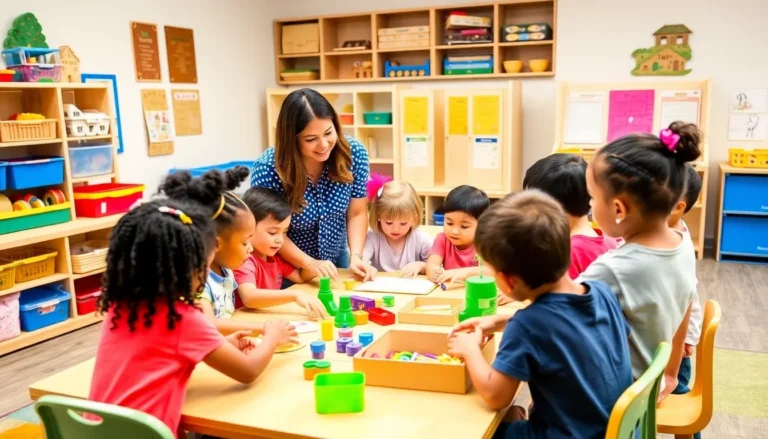
Hands-on learning materials are essential to Montessori education, promoting active engagement. These materials are designed to be intuitive, allowing children to explore concepts through tactile experiences. For instance, math manipulatives help children visualize abstract ideas. Multi-sensory tools cater to different learning styles, enhancing understanding and retention. This method supports critical thinking and problem-solving skills by encouraging exploration and experimentation.
Benefits of Montessori Teaching Methods
Montessori teaching methods provide numerous benefits, fostering an environment that supports personalized learning and the development of essential skills.
Fostering Independence
Montessori methods prioritize independence by allowing children to make choices regarding their learning activities. Children select tasks that interest them, which cultivates self-motivation and confidence. The environment is designed to be accessible, encouraging children to take initiative in their learning. By learning to manage their schedules and responsibilities, children develop decision-making skills. This approach enables them to navigate challenges independently, preparing them for future academic and life situations.
Encouraging Critical Thinking
Montessori education emphasizes critical thinking through hands-on, experiential learning. Children engage with multi-sensory materials that promote exploration and inquiry. This approach encourages problem-solving, as children learn to analyze situations and formulate solutions independently. Group activities and discussions enhance collaboration and idea-sharing among peers, fostering a deeper understanding of concepts. By prioritizing critical thinking, Montessori methods prepare children to tackle complex problems in innovative ways.
Comparing Montessori With Traditional Education
Montessori education differs significantly from traditional education methods, particularly regarding teaching methods and learning environments.
Teaching Methods
Montessori teaching methods focus on child-led learning. Children engage with materials that encourage exploration and problem-solving. Educators serve as guides, facilitating learning without dictating the process. Traditional education typically employs a teacher-centered approach, where instructors deliver lectures and students passively receive information. In contrast, Montessori methods foster independence by allowing children to select activities that align with their interests. This approach cultivates intrinsic motivation, as children learn at their own pace, enhancing their engagement and retention of knowledge.
Key Differences:
- Instruction Style: Montessori uses indirect instruction while traditional education favors direct instruction.
- Role of Educators: Montessori educators guide and observe, whereas traditional teachers lead and assess through standardized tests.
- Learning Focus: Montessori values learning through experience, while traditional methods emphasize rote memorization and standardized curricula.
Learning Environments
Montessori environments are carefully designed to promote autonomy and exploration. Classrooms feature a range of materials and activities that invite interaction, allowing children to explore at their own pace. These environments are often mixed-age, encouraging peer learning and mentorship. In contrast, traditional education settings group students by age, often leading to a more competitive atmosphere.
Key Characteristics:
- Material Availability: Montessori classrooms offer diverse hands-on materials, while traditional classrooms rely on textbooks and lectures.
- Classroom Setup: Montessori spaces are open and flexible, promoting movement and collaboration; traditional classrooms are usually structured with fixed seating arrangements.
- Social Interaction: Montessori emphasizes cooperative learning among children of different ages, whereas traditional methods often promote individual performance and achievement.
The distinctive teaching methods and learning environments in Montessori education support a holistic approach to learning that contrasts sharply with traditional educational practices.
Challenges and Critiques
Montessori teaching methods face several challenges and critiques that merit discussion. These include concerns regarding accessibility and inclusivity, as well as the requirements for teacher training.
Accessibility and Inclusivity
Accessibility issues arise when Montessori schools lack sufficient resources and adaptations for students with disabilities. The standard Montessori environment may not accommodate all learning needs, potentially leaving some children without adequate support. Inclusivity, while a core principle, can be difficult to achieve without specific training and resources aimed at integrating diverse learners. Montessori schools often rely on additional funding or grants to provide necessary support, which may not always be available.
Teacher Training Requirements
Teacher training for Montessori education requires specialized credentials that differ from traditional teaching certifications. Programs vary in rigor and depth, leading to variations in teaching quality across different Montessori schools. Inadequate training may result in educators lacking the skills to effectively implement Montessori methods. Furthermore, the emphasis on self-directed learning requires teachers to possess a strong understanding of child development and educational psychology, which may not be prioritized in all training programs. This inconsistency can impact the overall effectiveness of the approach.
Montessori teaching methods offer a unique approach to education that nurtures a child’s natural curiosity and independence. By prioritizing individualized learning and hands-on experiences, this method fosters self-motivation and critical thinking. As children engage with diverse materials and learn alongside peers, they develop essential life skills and a sense of community.
While the benefits of Montessori education are clear, addressing challenges like inclusivity and teacher training remains crucial. With continued focus on improvement, Montessori can further enrich the educational landscape, making learning a joyful and empowering journey for all children.